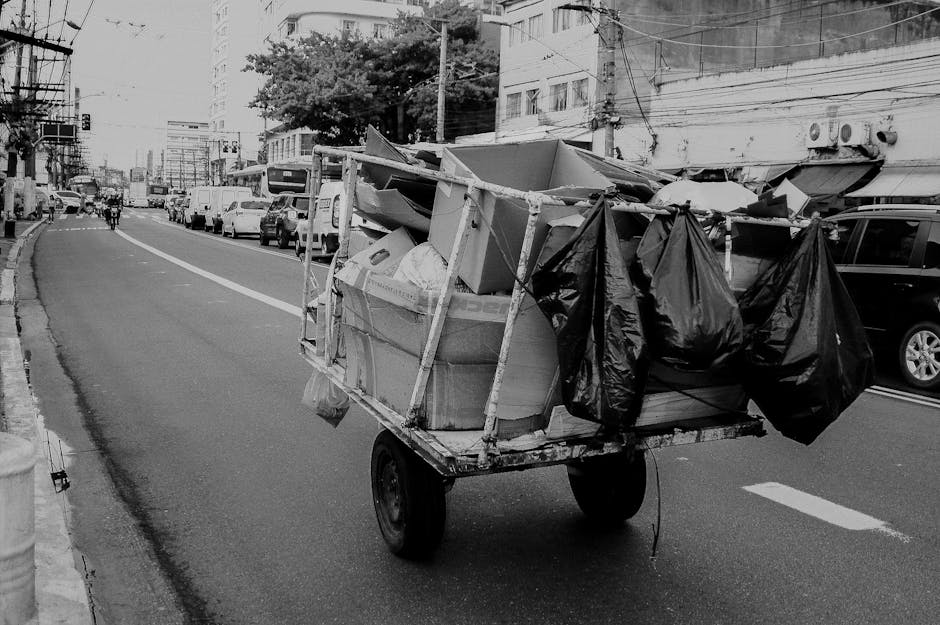
Commercial Rubbish Services Dalston Ridley Road Market: A Practical Guide for Busy Businesses
If you run a stall, shop, cafe, workspace, or managed premises near Ridley Road Market, rubbish can become one of those background problems that quietly gets louder. Boxes pile up. Packaging gets damp. Broken fittings sit in a corner. A delivery day turns into a waste day. Commercial Rubbish Services Dalston Ridley Road Market are designed to take that pressure off so your business can stay tidy, compliant, and workable without turning the back room into a dumping ground.
In plain English, this is about reliable commercial waste removal for a busy, high-footfall part of Dalston. It is not just "taking things away". It is about timing, access, sorting, lifting, and making sure waste leaves your site in a way that makes sense for your operations. And yes, if you have ever tried to move a stack of cardboard through a narrow passage during opening hours, you already know why that matters.
This guide explains how the service works, who it helps, what to watch out for, and how to choose the right approach for the realities of Ridley Road Market and the surrounding streets.
Why Commercial Rubbish Services Dalston Ridley Road Market Matters
Ridley Road Market is busy, lively, and constantly moving. That is part of its charm, but it also means waste builds up quickly. Deliveries arrive in waves, traders unpack fast, and customers expect a clean, safe environment. Left unchecked, rubbish affects more than appearance. It can slow down trading, create trip hazards, attract pests, and make even a well-run business feel disorganised.
Commercial waste also has a different feel from household rubbish. There is usually more packaging, more mixed materials, more bulky items, and a stronger need for predictable collections. A business might have display waste one day, old shelving the next, and a full run of cardboard after a stock refresh. That is normal. The trick is having a system that keeps up.
For local operators, the main value of a dedicated service is simple: it fits around commercial life instead of forcing commercial life to stop. That matters in a market setting where access can be tight, timing matters, and every square metre feels like it earns its keep.
Practical takeaway: the cleaner and more structured your waste handling, the easier it is to keep customers moving, staff working, and the whole space looking trustworthy. In retail and market settings, that trust is not a small thing. Not really.
How Commercial Rubbish Services Dalston Ridley Road Market Works
The process is usually straightforward, but the details matter. A good commercial rubbish collection should start with understanding the type of waste you have, the volume, the access to the site, and the timing that suits your trade hours. Once those basics are clear, the collection can be arranged so disruption stays low.
For many businesses, the service works in one of three ways: a one-off clearance, an occasional ad hoc collection, or a more regular waste-removal arrangement. One-off jobs are useful after refurbishments, stock changes, or a major tidy-up. Regular collections are better for busy units and traders with steady packaging waste, damaged stock, or recurring bulky items.
In practice, the team arrives, assesses access, loads the waste, and removes it for sorting and responsible handling. If the job includes mixed materials, the waste is typically separated where possible so recyclable items do not end up mixed in with general rubbish unnecessarily. That is good for the environment, but also just common sense.
If you need broader support beyond commercial rubbish, it can help to look at related services such as business waste removal and general waste removal. For workplaces with desks, archive clutter, broken chairs, or tired office furniture, office clearance is often the cleaner fit.
On a busy street or market edge, good access planning is half the job. If the collection team has to navigate narrow entrances, delivery windows, or shared corridors, a little preparation goes a long way. A tiny bit of prep can save a lot of fuss. Honestly, it usually does.
Key Benefits and Practical Advantages
The obvious benefit is getting rid of rubbish. But the real value goes further than that. Commercial rubbish services are really about keeping a trading space usable and reducing the hidden drag that waste creates day after day.
- Less disruption: collections can be timed around opening hours, deliveries, or quieter periods.
- Better presentation: customers notice clean, orderly surroundings. Even if they do not comment, they notice.
- Reduced safety risks: fewer obstacles, fewer loose items, and less chance of blocked exits or trip hazards.
- More efficient staff time: your team can focus on trading rather than dragging waste bags out the back.
- Improved handling of bulky waste: awkward items like display units, counters, and old stock can be removed properly.
- More responsible disposal: recyclable materials can be separated and handled with care.
There is also a quieter benefit: peace of mind. When waste stops being a weekly headache, it is easier to run the business with less stress. That may sound small, but it adds up. It always does.
For businesses that regularly replace stock or furniture, it may also help to pair collections with furniture-focused services such as furniture clearance or furniture disposal. If the job includes old counters, shelving, or office pieces, those routes can be more efficient than treating everything as mixed rubbish.
Who This Is For and When It Makes Sense
This service is for any commercial operator who creates waste that is awkward, bulky, frequent, or simply too much for normal bins. Around Ridley Road Market, that can include traders, small retailers, food businesses, salons, offices, workshops, and landlords managing commercial units.
It also makes sense during specific situations:
- after a refit, clean-down, or stock refresh
- when storage space is getting swallowed by broken packaging or unusable items
- when you need old fixtures or furniture removed quickly
- when shared bin areas are becoming unmanageable
- when staff are spending too much time moving rubbish rather than serving customers
A small cafe with a daily packaging build-up may need a different rhythm from a market stall clearing display waste once a week. A builder fitting out a unit may need something closer to builders waste clearance. A larger premises may need support from office clearance or a more general commercial collection approach.
Truth be told, the service makes most sense when the waste problem is starting to interfere with trading. If you are stepping around it, stacking it, or pretending you will deal with it later, that is usually the moment to act.
Step-by-Step Guidance
If you are arranging commercial rubbish collection for the first time, keep it simple. The most efficient jobs are usually the ones where the client gives clear information upfront. Here is a practical way to approach it.
- Identify the waste type. Separate general waste, recyclable packaging, furniture, fixtures, and any special items that may need extra care.
- Estimate the volume. Think in bags, boxes, pallets, or bulky items. A rough estimate is fine, but be honest.
- Check access. Note narrow doorways, stairs, loading restrictions, parking limitations, or time windows.
- Choose the right service level. One-off, ad hoc, or regular collections all suit different business patterns.
- Prepare the waste. Put items where they can be collected safely and quickly, without blocking staff or customers.
- Confirm timing. Early morning or off-peak collections often reduce disruption in busy market areas.
- Review what went well. After the first collection, notice what could be made easier next time.
If your waste includes items that are still usable, it is often worth asking whether they can be separated before collection. A few undamaged chairs or shelving units may be better handled through furniture clearance rather than tossed into a mixed load. Small decision, big difference.
And if the rubbish has spread beyond the trading space into a rear store, loft, or underused room, related clearance options like loft clearance or even garage clearance can help restore order. That sounds mundane, but a tidy back area can transform how a business feels.
Expert Tips for Better Results
In our experience, the best waste jobs are rarely the most dramatic. They are the well-organised ones. A few small habits make a noticeable difference.
- Keep waste streams separate where possible. Cardboard, mixed rubbish, and reusable items should not all be thrown together unless there is no practical alternative.
- Use clear holding areas. Mark out a corner, a cage, or a designated point so rubbish does not drift across the premises.
- Schedule around the busiest hour. A collection at the wrong time can be more disruptive than the rubbish itself.
- Photograph bulky items before collection. This helps when you need a clearer estimate or want to avoid surprises on the day.
- Ask about recycling handling. Even if you do not need a deep environmental lecture, you probably do want sensible recycling options.
One small local observation: in places like Dalston, where access can change with traffic, deliveries, and footfall, being ready five minutes early is sometimes the difference between a smooth pickup and a slightly fraught one. Not glamorous. Very useful, though.
You can also strengthen the wider business operation by reviewing support pages such as pricing and quotes if you want clearer cost expectations, and recycling and sustainability if you want to know how waste is handled responsibly. Those details matter more than people think.
Common Mistakes to Avoid
Most waste problems are not caused by one huge error. They come from small, repeated ones. Here are the usual culprits.
- Leaving everything until the last minute. A back room full of clutter is harder to sort and usually more stressful to clear.
- Underestimating how much waste there is. One "small tidy-up" can become three van-loads worth of items. Happens all the time.
- Mixing reusable materials with general rubbish. That can increase cost and reduce recycling potential.
- Ignoring access issues. If there is no parking plan or loading point, the collection day becomes awkward fast.
- Choosing the cheapest option without checking what is included. Price matters, yes, but so does reliability, handling, and clarity.
- Forgetting compliance responsibilities. Commercial waste is not something to leave to chance.
Another subtle mistake is assuming any collection service will be fine just because it is nearby. Proximity helps, of course, but commercial jobs need the right setup. A unit on a busy market street has different needs from a quiet office on an estate. That distinction is easy to miss when you're rushing.
Tools, Resources and Recommendations
You do not need a complicated toolkit to manage commercial rubbish well. A few simple items and habits make the whole process easier.
- Heavy-duty sacks or bins: useful for packaging, light mixed waste, and routine clear-outs.
- Labelling tape or markers: helps separate recyclables from general waste.
- A basic collection log: useful for tracking what goes out and when, especially for repeat jobs.
- Photo record on a phone: handy for bulky waste, access checks, and quote clarity.
- Dedicated storage corner: even a modest one can keep your premises much tidier.
If you are managing waste in a commercial premises with regular office activity, it is worth reviewing business waste removal alongside more specialised options like office clearance. For back-of-house spaces, old stock rooms, or storage-heavy sites, waste removal can be a practical umbrella service.
For businesses with mixed needs, related clearance pages such as home clearance and house clearance are sometimes relevant if the premises include live-in accommodation, above-shop rooms, or domestic-style spaces. It depends on the setup. London buildings love a surprise layout.
Law, Compliance, Standards, or Best Practice
Commercial waste in the UK needs to be handled carefully. The exact duties can vary depending on the type of business, the waste stream, and how the service is arranged, so it is always wise to check the specifics that apply to your situation. The safe approach is simple: use a reputable service, keep clear records where needed, and make sure waste is taken away responsibly.
Best practice usually includes:
- using a provider that can explain how waste is handled
- keeping waste separate where practical
- avoiding fly-tipping and untraceable disposal routes
- maintaining safe access for staff and collections
- storing waste so it does not create hazards or block exits
If a job involves heavier or awkward materials, it is sensible to think about lifting safety, load stability, and site access before the team arrives. That is part of normal commercial good practice, and frankly it reduces the chance of a messy afternoon.
For businesses that value reassurance, pages such as health and safety policy, insurance and safety, complaints procedure, and terms and conditions can be useful to review before committing to a provider. They help set expectations. That is rarely exciting, but it is reassuring.
You should also expect clear privacy and payment information if you are dealing with a professional business. Those basics live on pages like privacy policy and payment and security, and they are worth reading if you are comparing providers carefully.
Options, Methods, or Comparison Table
Not every waste problem needs the same solution. Sometimes a quick collection is enough. Sometimes a more structured service makes far more sense. Here is a simple comparison.
| Option | Best for | Pros | Possible downside |
|---|---|---|---|
| One-off commercial rubbish collection | Clear-outs, post-refit waste, occasional bulky loads | Flexible, quick, useful for sudden build-ups | May not suit recurring waste |
| Regular business waste removal | Busy premises with steady waste generation | Predictable, easy to manage, less clutter | Needs a stable schedule |
| Specialist clearance | Furniture, builders waste, office items, storage rooms | Better handling of specific waste types | May need a more detailed brief |
| General waste removal | Mixed everyday rubbish | Simple and practical | Less tailored for bulky or specialist waste |
If you are unsure, a mixed approach often works best. For example, a shop might use regular collections for packaging and a one-off clearance for old display units. A cafe might need routine rubbish support plus occasional furniture disposal when seating is replaced. That is normal. Businesses change, and waste patterns change with them.
Case Study or Real-World Example
Picture a small independent retailer near Ridley Road Market after a seasonal refresh. New stock arrives, old display stands are replaced, cardboard starts gathering behind the counter, and two broken shelves are leaning in the stock room. Nothing dramatic. Just enough clutter to make the back area feel cramped and slightly frantic.
The owner does a quick sort: recyclable cardboard in one pile, reusable fixtures set aside, broken waste separated, and a few miscellaneous items tagged for removal. Collection is arranged for early morning before trading gets busy. The team clears the access point, and the load is taken away in one visit rather than spread across three stressed-out days.
What changes afterwards? The stock room breathes again. Staff can move properly. The front of house feels calmer because the chaos at the back is gone. And, rather refreshingly, the owner stops dreading the sight of the door being opened each morning.
That is the real value of good commercial rubbish support. It is not just removal. It is restoring workable space.
Practical Checklist
Use this quick checklist before arranging a collection:
- Have I identified all waste types clearly?
- Do I know roughly how much needs collecting?
- Have I checked access, parking, stairs, and loading points?
- Is the waste stored safely and not blocking staff or customers?
- Have I separated recyclable or reusable items where practical?
- Do I need a one-off collection or a regular schedule?
- Have I confirmed the best time to avoid trading disruption?
- Do I understand any compliance or record-keeping needs for my business?
- Have I reviewed the provider's safety and service information?
- Is there a clear next step if the job turns out larger than expected?
If most of those answers are yes, you are in good shape. If not, no panic. A bit of planning usually sorts it out.
Get a free quote today and see how much you can save.
Conclusion
Commercial rubbish services in Dalston, especially around Ridley Road Market, are really about keeping busy businesses moving. The right service reduces mess, saves staff time, improves safety, and helps the premises feel organised rather than constantly half-under-control. And let's be honest, that feeling matters more than people admit.
If you have a recurring waste issue, a one-off clear-out, or a back-of-house area that has become a bit too inventive with storage, the best time to act is before it starts affecting customers and staff. A clean, workable space supports better trading. Simple as that.
When waste is handled well, the business looks sharper, the day runs smoother, and you get a little bit of breathing room back. That is worth a lot in a place as lively as Dalston.
Frequently Asked Questions
What counts as commercial rubbish services near Ridley Road Market?
It usually means waste removal for businesses, traders, and commercial premises rather than household collection. That can include packaging, mixed rubbish, broken fittings, furniture, and bulky clear-out items.
How often should a business arrange commercial rubbish collection?
That depends on how much waste you produce. Some businesses need weekly or regular collection, while others only need help after stock changes, repairs, or seasonal clear-outs.
Can the service handle bulky items like shelving or counters?
Yes, in many cases. Bulky items are common in commercial clearances, especially when shops, cafes, or offices are being refreshed. It helps to describe the items in advance.
Is this different from regular domestic rubbish removal?
Yes. Commercial waste tends to involve more volume, different materials, tighter timing, and more attention to access and business disruption. It is a different rhythm altogether.
What should I do before the collection team arrives?
Sort the waste if you can, clear access paths, and make sure the items to be removed are easy to identify. A few minutes of prep can make the whole job smoother.
Can recyclable materials be separated?
Usually, yes. Cardboard, reusable furniture, and other recyclable materials should be separated where practical so they can be handled more responsibly.
What if my premises have awkward access or narrow stairs?
That is worth mentioning early. Access details help the collection team plan properly, especially in older London buildings where stairs, corridors, and loading space can be a bit tight.
Do I need a one-off or regular service?
If your waste builds up steadily, regular service is often the easier option. If you only have occasional large clear-outs, one-off collection may be enough.
How can I avoid overspending on waste removal?
Be accurate about what needs removing, separate reusable items where possible, and choose the service type that fits the job rather than defaulting to the biggest option.
What should I ask before booking a provider?
Ask what is included, how waste is handled, whether the team can manage bulky or awkward items, and what preparation is needed on your side. Clear answers are a good sign.
Does a commercial rubbish service help with compliance?
It can help, especially when the provider follows sensible handling practices and you keep your own records and waste arrangements in order. Compliance is a shared responsibility, so clarity matters.
Can this service help if my stock room or office is overloaded?
Yes. In many cases, a targeted clearance is the fastest way to regain usable space. Services like office clearance, furniture disposal, and general waste removal are often the most relevant starting points.